NARRATOLOGIUMAtlas of Strands & Meaning

Narratologium · A living archive of stories

Every life leaves fragments.
Every telling makes a pattern.

Explore how stories are built, how perspectives change them, and what their sources reveal.

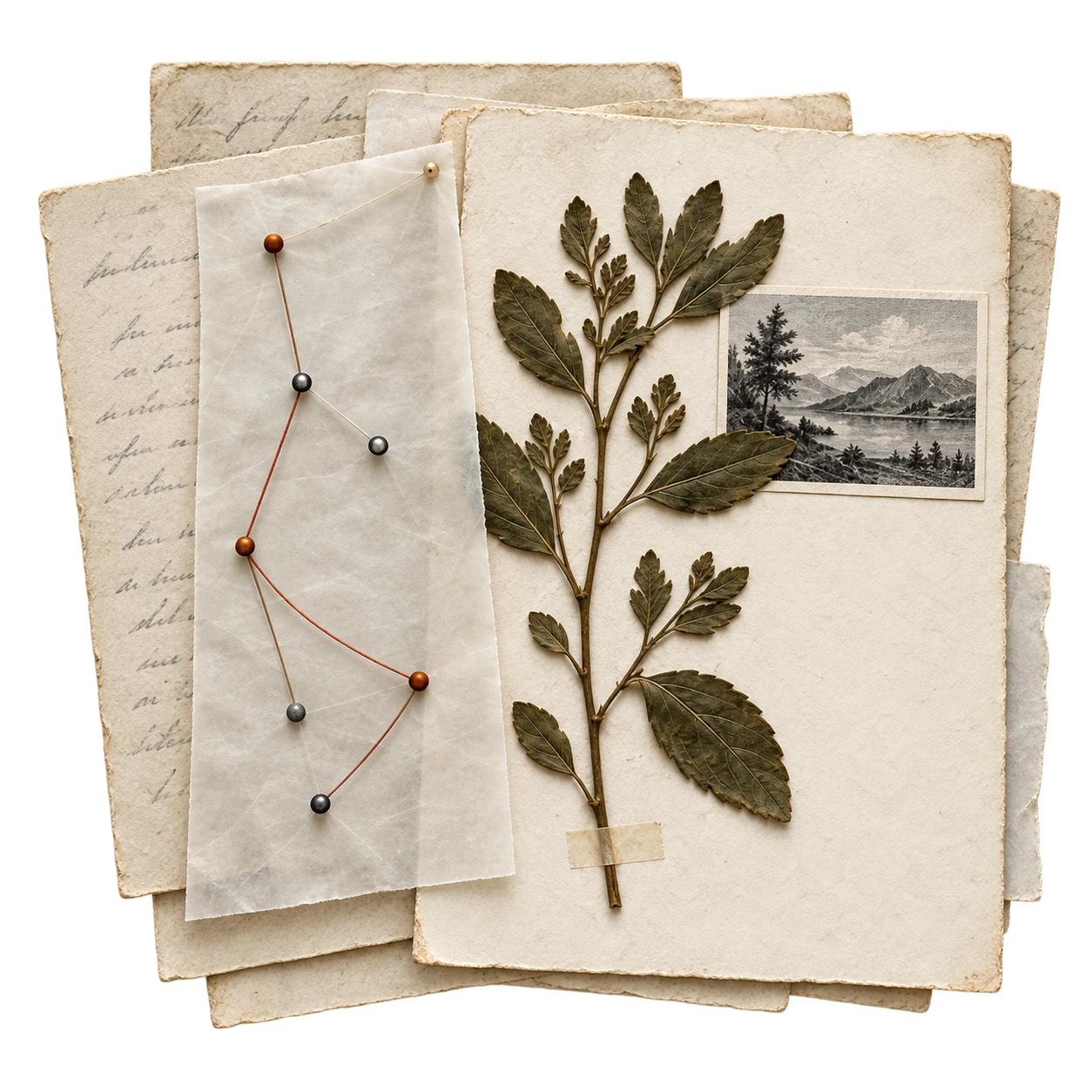
Illustrative AI artwork of a pressed plant resting on layered paper pages.

What survives.
What changes.

Fig. 01 / Fragments & formsAI illustration · creation record ↗

At the reading table

One story. More than one way in.

Start with a passage from Frankenstein. Follow a voice, change your perspective, then see how the telling holds together.

A story on the tableMary Shelley / 1831 text

Frankenstein

Three voices. A story within a story.

Choose a way to read
Follow a voice
Narrator, from outer to inner frame

Creature selected. Read the passage.

Frankenstein; or, The Modern PrometheusChapter 10

Creature / The voice inside Victor’s account

A plea to be heard

Remember that I am thy creature; I ought to be thy Adam, but I am rather the fallen angel, whom thou drivest from joy for no misdeed.

— Creature, speaking to Victor Frankenstein

Read Chapter 10 in the 1831 text ↗
Source & editorial note Mary Shelley · Frankenstein · 1831

Passages are transcribed from Project Gutenberg eBook #84, using the 1831 text and chapter numbering. Walton: Letter 2; Victor: Chapter 5; Creature: Chapter 10. Whitespace is normalized. The original text is public domain in the United States.

Margin notes, questions, and connections are editorial readings, not quotations or measured findings. These are passages from different moments in the novel, selected to explore its nested voices.

Read the source text ↗Visit the source ledger →

Find your way into the atlas

Follow your question.

Begin with what makes you curious. Each entrance opens a different way to read.

01

How is a story built?

Look beneath the plot. Follow its frames, its turning points, and the order in which a story lets you know.

Explore story structure
02

Whose eyes are we looking through?

A change of voice changes what comes into view. Study who speaks, who perceives, and what remains outside the frame.

Enter the perspective lab
03

Where does an account begin?

Follow an interpretation back to its materials. Examine the sources, their context, and the gaps they leave behind.

Open the source ledger

A practice of close attention

Keep the story.
Read the seams.

A narrator chooses where to begin. A witness notices one detail and misses another. An ending changes how we remember everything before it. Narratologium makes these choices available to examine.

Move between the words on the page, an interpretation of their effect, and the source that lets you check the reading for yourself.

  • Source · the words
  • Interpretation · a reading
  • Context · the evidence
  • Meaning · the connections

The working collection

Tools for a closer reading.

Return to a familiar instrument, or take your question somewhere new.
AEO / GEO Knowledge Graph

Keep asking questions.

Explore the ideas, methods, and instruments behind the atlas.